
Asphalt Plant Dryer
The asphalt plant dryer is one of the most critical components of an asphalt production plant. It removes moisture from the aggregates and heats them to the required temperature before transferring the hot material safely to the screening system.
The efficiency of the drying process has a direct impact on asphalt quality, production capacity, fuel consumption, and emission performance. For this reason, a properly engineered asphalt plant dryer drum is one of the key factors determining the overall performance of an asphalt mixing plant.
MBA asphalt plant dryers are engineered to deliver maximum heat transfer, low fuel consumption, extended service life, and reliable operation under the most demanding working conditions. Designed with high-efficiency drying technology, our rotary dryer systems help asphalt producers achieve consistent production quality while reducing operating costs.
What Is an Asphalt Plant Dryer ?
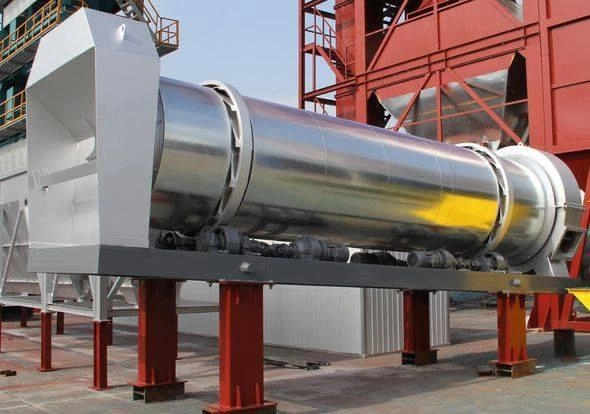
An asphalt plant dryer is a key component of an asphalt mixing plant that dries and heats aggregates by exposing them to high-temperature gases inside a rotating drum. It removes moisture from the aggregates and raises them to the required temperature before they are transferred to the screening system for further processing.
Inside the dryer drum, specially engineered flights (lifting blades) continuously lift and cascade the aggregates through the hot gas stream, maximizing heat transfer efficiency. This optimized design ensures uniform drying, reduces fuel consumption, and enables higher production capacity while maintaining consistent asphalt quality.
Engineering Features That Maximize Thermal Efficiency
The performance of an asphalt plant dryer is determined not only by the burner flame but by how efficiently that heat is transferred to the aggregates. At MBA, our dryer drums are engineered to maximize heat transfer, reduce fuel consumption, and ensure consistent drying performance through three key design principles.
1. Custom-Engineered Flight Geometry
The arrangement, angle, and profile of the dryer flights (lifting blades) are carefully engineered to create a continuous and uniform aggregate curtain inside the rotating drum.
This optimized curtain allows the aggregates to remain suspended in the hot gas stream for the ideal amount of time, maximizing heat transfer while preventing heat loss through the drum. As a result, the aggregates absorb more thermal energy, exhaust gas temperatures are reduced, and fuel efficiency is significantly improved.
With a properly engineered flight design, fuel consumption can typically be reduced by 15–20%, depending on aggregate moisture content, production capacity, and operating conditions. This also contributes to more stable asphalt production and lower operating costs.
2. Heavy-Duty Friction Drive System
MBA asphalt plant dryers are designed to withstand high operating temperatures and continuous dynamic loads. The dryer drum rotates on heavy-duty support rollers using forged steel tyre rings and a reliable friction drive system, ensuring stable and long-lasting performance under demanding production conditions.
The drive system is powered by high-torque electric motors and controlled with a soft starter, providing smooth start-up and shutdown while reducing mechanical stress on the drivetrain. This helps extend the service life of motors, gearboxes, and support components.
To compensate for thermal expansion during operation, the dryer is equipped with specially engineered support assemblies that allow controlled movement of the drum. This design minimizes mechanical stress, prevents premature wear, and ensures reliable operation even during continuous high-capacity production.
3. Superior Drum Insulation
To minimize heat loss and maximize thermal efficiency, the outer shell of the asphalt plant dryer is insulated with high-density rock wool insulation. This insulation significantly reduces heat radiation to the surrounding environment, improving fuel efficiency and lowering overall energy consumption.
The insulation is protected by a durable stainless steel or aluminum cladding, providing excellent resistance to corrosion, weather conditions, and mechanical impacts. In addition to enhancing durability, the protective outer casing gives the dryer a clean, professional appearance while reducing maintenance requirements throughout its service life.
These insulation solutions help maintain stable operating temperatures, improve drying efficiency, and contribute to lower operating costs for asphalt producers.
Asphalt Plant Dryer Technical Specifications
Drum Shell Material
Heavy-duty boiler steel resistant to high temperatures and abrasion (P265GH / S355JR / equivalent grades available upon request)
Shell Thickness
10–12 mm heavy-duty drum shell (depending on plant capacity and project requirements)
Drive System
Heavy-duty friction drive system with four support rollers
Starting System
High-torque electric motor with integrated soft starter for smooth start-up and shutdown
Tyre Rings
Heat-treated, forged steel tyre rings designed for long service life
Drum Insulation
50–100 mm high-density rock wool insulation with aluminum or stainless steel cladding
Internal Wear Parts
Replaceable, bolted wear plates and lifting flights manufactured from abrasion-resistant steel
Flight System
Custom-engineered lifting flights for maximum heat transfer and uniform aggregate curtain
Operating Capacity
Available for asphalt plants from 80 to 320 TPH
Fuel Compatibility
Suitable for natural gas, diesel, heavy fuel oil, and dual-fuel burners
Applications
Stationary asphalt plants, mobile asphalt plants, and asphalt plant modernization projects
Asphalt Plant Dryer Retrofit & Modernization
Regardless of your asphalt plant’s brand or model, the performance of the dryer drum gradually declines over time due to shell deformation, wear, thermal fatigue, misalignment, and inefficient lifting flights. These issues can lead to higher fuel consumption, reduced production capacity, inconsistent aggregate heating, and increased maintenance costs.
With extensive engineering experience, MBA provides complete asphalt plant dryer retrofit and modernization services. We remove the existing dryer and replace it with a new, high-efficiency MBA asphalt plant dryer, fully compatible with your plant’s existing structure, automation system, burner, and conveying equipment.
Every retrofit project begins with precise on-site measurements and detailed engineering analysis. The new dryer is custom-designed to match your plant’s specifications, ensuring seamless integration with minimal downtime. The result is significantly improved thermal efficiency, lower operating costs, increased production capacity, and the performance of a modern asphalt mixing plant—without replacing your entire facility.
ASPHALT PLANT DRYER SOLUTIONS CUSTOMIZED FOR YOUR PROJECT
Let us prepare a tailored offer with the right capacity, technical specifications, and competitive pricing for your project.
Frequently Asked Questions About Asphalt Plant Dryers
Find answers to the most frequently asked questions about asphalt plant dryer drums, friction drive systems, aggregate moisture, fuel consumption, dryer flight design, and asphalt plant dryer retrofits.
How does aggregate moisture affect asphalt plant dryer capacity and fuel consumption?
A significant portion of the thermal energy generated by the burner is used to evaporate the moisture contained in the aggregates. As aggregate moisture increases, the dryer requires more energy to achieve the target aggregate temperature, which directly affects production efficiency.
As a general rule, every 1% increase in aggregate moisture can reduce plant production capacity by approximately 10–15% while increasing fuel consumption by around 10%, depending on the plant configuration and operating conditions.
MBA asphalt plant dryers are engineered with high-efficiency flight geometry and optimized heat transfer technology to maintain maximum drying performance, even when processing aggregates with higher moisture content. This helps asphalt producers achieve stable production rates, lower fuel consumption, and improved thermal efficiency.
What Are the Advantages of a Friction Drive Asphalt Plant Dryer System?
Conventional chain-driven or gear-driven asphalt plant dryers often suffer from vibration, excessive noise, frequent lubrication requirements, and unexpected downtime caused by chain or gear failures.
In contrast, a friction drive system supports the dryer drum on four heavy-duty support rollers, allowing it to rotate smoothly and quietly through friction rather than mechanical transmission components.
The main advantages of a friction drive dryer system include:
* Smooth and quiet operation
* Lower vibration levels
* Reduced maintenance requirements
* No chain or gear wear
* Longer service life of drive components
* Lower operating and maintenance costs
* Improved operational reliability
* Stable drum rotation under heavy-duty production conditions
MBA asphalt plant dryers are equipped with heavy-duty friction drive systems, engineered to provide maximum reliability, continuous production, and long service life even under the most demanding operating conditions.
How Often Should Dryer Flights Be Replaced?
The service life of dryer flights (lifting blades) depends on several factors, including the abrasiveness of the aggregates being processed (such as basalt or granite), plant operating hours, and overall production capacity. Highly abrasive materials cause the flights to wear more quickly, reducing drying efficiency over time.
At MBA, the inlet flights and internal wear plates of our asphalt plant dryers are designed as bolted, easily replaceable components, allowing maintenance to be completed quickly without replacing the entire drum.
To maintain optimum thermal efficiency and a uniform aggregate curtain, the flights should be inspected during scheduled maintenance and replaced whenever excessive wear is detected. Timely replacement helps preserve drying performance, reduce fuel consumption, and extend the service life of the dryer drum.
Benefits of Replaceable Dryer Flights:
– Fast and easy replacement
– Reduced maintenance downtime
– Lower maintenance costs
– Consistent drying performance
– Improved heat transfer efficiency
– Extended service life of the dryer drum
Can an Asphalt Plant Dryer Be Retrofitted for Any Brand of Asphalt Plant?
Yes. Regardless of your asphalt plant’s brand or country of origin, MBA can replace worn, undersized, or inefficient dryer drums with a new, high-performance asphalt plant dryer designed specifically for your existing plant.
Our engineering team designs each dryer retrofit to integrate seamlessly with your current burner, cold feed system, elevator inlet, support structure, and plant automation. This allows you to upgrade your drying performance without replacing the entire asphalt plant.
Using precise on-site measurements and custom engineering, we manufacture a new MBA asphalt plant dryer that fits your existing installation with minimal modifications and downtime.
Benefits of an MBA Dryer Retrofit:
* Compatible with all major asphalt plant brands
* Seamless integration with existing burner and automation systems
* Increased production capacity and thermal efficiency
* Reduced fuel consumption and operating costs
* Minimal installation time and production interruption
* Custom-engineered to match your plant’s specifications
Whether your existing dryer has reached the end of its service life or no longer meets your production requirements, an MBA asphalt plant dryer retrofit is a cost-effective solution to modernize your plant and restore peak performance.